AI Just Grew Feet—and It Looks Like a $399 Robot Duck
Meet Microduck, the $399 robot duck that walks, grasps small objects, and gets back up after a fall. With programmable movements and open-source software, this tiny robot offers a hands-on introduction to physical AI.
Written by Arun Krishnan2 min read
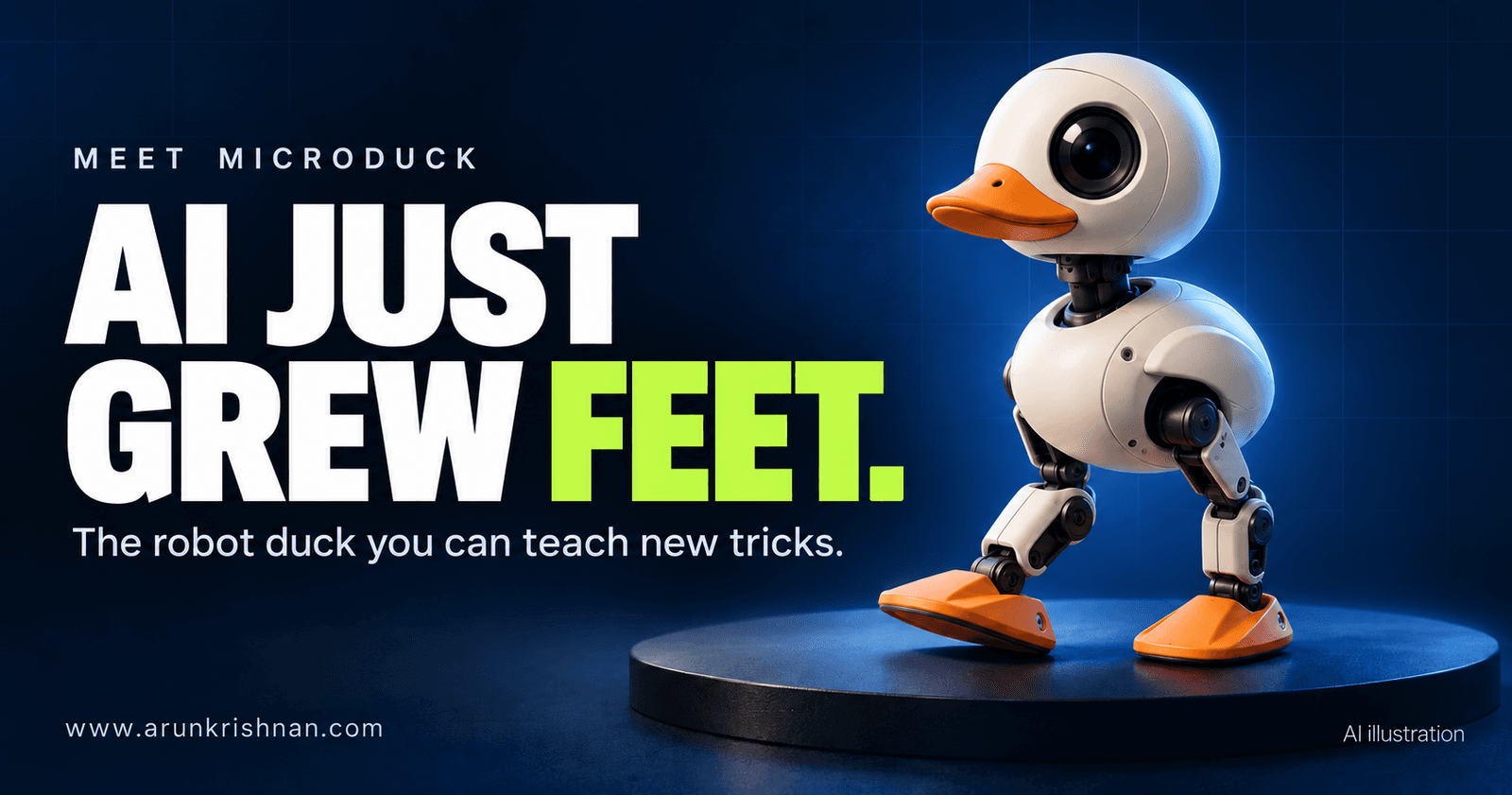
Meet Microduck, the tiny programmable robot bringing AI out of the chat window and into the physical world.
We have become used to AI that writes emails, generates images, and answers questions. But what happens when AI has to balance on two feet, pick something up, or recover after falling?
That is where a little robot called Microduck gets interesting.
Created by Pollen Robotics, part of Hugging Face, Microduck is a duck-shaped robot designed for experimenting with movement and machine learning. Its introductory preorder price is $399 before taxes and shipping. Behind its playful appearance is a platform for exploring how robots learn physical skills.
Small Robot. Plenty of Movement.
Microduck stands approximately 25 centimetres tall, weighs around 800 grams, and packs 15 motors into its compact body.
According to its manufacturer, it can walk, sit, crouch, and get back up from many common falls. Its articulated beak can grasp small objects, and roller accessories let it skate. A camera, depth sensor, and two motion sensors provide information about its surroundings and movement.
Those movements might look simple on video. In robotics, they represent a difficult challenge.
A chatbot can produce another answer when something goes wrong. A walking robot must deal with gravity. A small mistake in balance can send the entire machine to the floor.
That makes watching it recover almost as interesting as watching it walk.
The Most Interesting Feature Is What You Can Teach It
Microduck’s appeal goes beyond its built-in movements.
Pollen Robotics provides an open-source software stack, including development tools, a physics simulator, and reinforcement-learning training tools. Developers can train movements in a virtual environment and transfer the resulting behaviour to the physical robot.
Think of simulation as a practice ground. A virtual robot can make repeated attempts at a movement while a training system evaluates how well it performs.
The real challenge comes when that learned movement meets an actual floor, actual motors, and an imperfect physical environment.
For a developer, that creates an engaging learning loop: build, train, test, observe, and improve.
Should You Expect a Household Helper?
Expect a robotics platform with personality.
Microduck’s manufacturer positions it around physical movement, experimentation, and learning. Teaching additional skills can involve programming and training. Picking up a small object in a demonstration is a starting point; reliably organising a room would require much more.
For students, makers, and curious developers, that challenge may be the attraction. Each limitation becomes something to investigate.
Why This Little Duck Matters
For many people, robotics still feels distant: expensive machines behind factory barriers or impressive demonstrations on a conference stage.
A small programmable robot offers a more approachable way to ask practical questions. How does a machine balance? What information does it need? Why does a movement work in simulation and fail in reality?
Microduck gives those questions a physical form.
Its most compelling promise is the opportunity to participate—to move from watching robots online to experimenting with one yourself.
The next AI skill you learn might involve helping a little duck get back on its feet.